

Welcome to all my new subscribers. I’m so thankful you chose to hit subscribe. 🥰
I realized that it’s probably time to do an updated intro post and to tell you who I am and how I got here.
A quick word about this newsletter
Long time readers will know that this is an author newsletter, but there are a lot of writers and industry professionals (hi!) who subscribe. There are also people who like my rabbit hole posts. Jane Friedman suggests that an author newsletter and a Substack content post should be two separate things and I don’t disagree in theory, but Leigh Stein recommends combining, rebranding into a newsletter for your audience, and putting your effort into that.
With Leigh’s advice in mind (because frankly she knows), I’ve renamed this newsletter Rabbit Holes for obvious going-down-the-research rabbit hole reasons, but also because I have a deep and abiding love for rabbits (readers of The Enigma Challenge will recognize this). 🐇
Also you might wonder you’re getting so my newsletter so much more frequently now and that’s because my book comes out in just a few weeks and frankly I’m in hyper anxious overdrive.
Now. On to the good stuff.
Hi! Nice to meet you!
I am Sierra, also writing under SC, Godfrey. I’m the author of three published novels: A Very Typical Family, The Second Chance Hotel, and my thriller that pubs in under a month, The Enigma Challenge. (And a fourth book, The Seven Keys, coming next.)
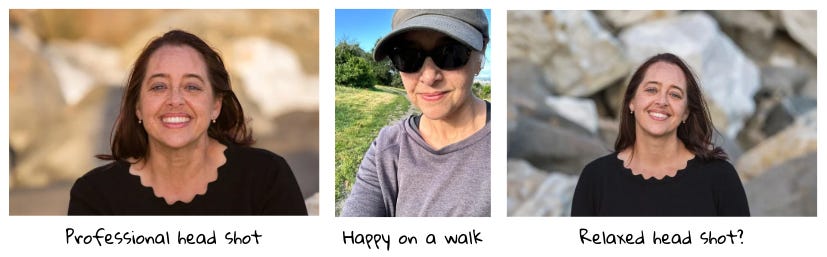
I’m extremely excited about The Enigma Challenge because it was the biggest deal I’ve done (big 5 auction, six figs, film rights, nice foreign rights—I am so, so grateful) and also something I wrote after a really, really difficult time of writing. So with that…
How I got here
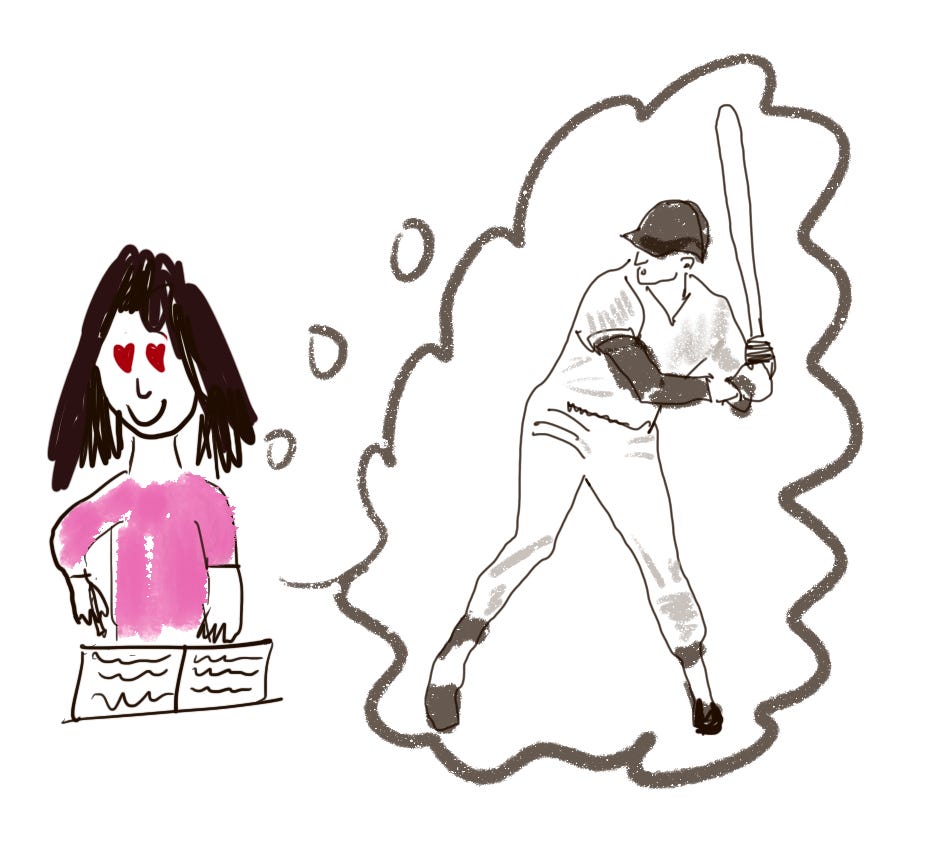
I’ve always been a writer. I wrote fan fiction in high school — although I had no idea that fan fiction sites existed, so I just filled reams of notebooks. It was baseball player fan fiction and supremely cringe but it absolutely was formative for me in discovering what I liked to write about and what was a good story. It had absolutely zero structure. That would come later.
When I was 30, I had a baby and felt like a piece of me had been absorbed by motherhood and a full-time job, and while I had folders full of half-started stories, I had never tried to write a whole novel. So I did — and it was 190,000 words 😂. Even worse, I set about going “ooh, how do I publish this?” and learned enough to query agents. One agent requested the full, because my query had voice, and then promptly form rejected it two days later. Rightly.
I set about writing another book and learned about word count, genre, and more. I still didn’t understand story structure.
It wasn’t until about 3 or so manuscripts later (each of which I queried 🙄) that I read Save the Cat and learned story structure beyond what I knew by absorbing media my whole life.
The first agent
I signed with my first agent for a book that was close, but ultimately died on sub. I began writing the book that would become A Very Typical Family, but just as I was attempting a rewrite, my agent left agenting and suddenly I was without representation, but…sort of not. The agency still held my contract, but the agency’s owner did not quite want to represent me, either. She kept me hanging for SIX MONTHS while she was deciding whether to keep me, until finally I said “Please let me go.” She wasn’t happy, but also hadn’t been keen to rep me, so she let me out of agency purgatory.
The second agent
I queried 12 agents. Six requested the full. And I happily signed with Melissa Edwards, who I am still with. She sold A Very Typical Family to Sourcebooks in a two book deal!
But a year later, Sourcebooks didn’t want to buy my option. Sales for A Very Typical Family were not what they wanted them to be, they said. At the time I was devastated and furious, but in retrospect, I understand it. Family drama/women’s fiction is a really hard sell in a crowded market, and if your sales (also called “track”) aren’t stellar and the book isn’t mind blowing, then taking another risk on you isn’t likely.
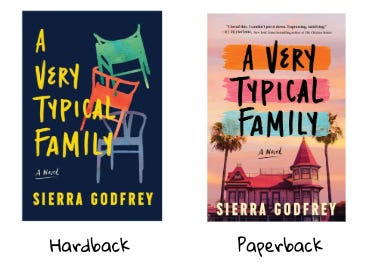
(Funnily enough, a year later, the book would undergo a cover redesign for paperback and then hit it big when it was chosen for Libby’s Big Library Read. Sales were very solid as a result. However, Sourcebooks had already passed by then and I’d moved on. Someday soon I’ll do a post about cover designs.)
But back then, my agent loved my option. She asked me to write the full and we’d go out widely on sub. I did, she loved the full, and was excited.
It died on sub.
I rewrote it based on some of the editor feedback we got—I honestly think that book could have used a lot more baking time, perhaps years, and the rewrite was brutal. By the end, I hated it. I was not interested or excited about it and when my agent read it, she said “Ah, this is not going to work.”
An unfortunate pivot
I shelved that bad rewrite. I was at a bit of a crossroads.
But what I DID want to do was write romance. My agent was all for this and supportive. So I wrote a romance; my beta readers were like “umm….” and my agent read it and said “I don’t think this is ready” which was a gentle way of saying “this is horseshit” (Iisten, it was), and so I rewrote it and rewrote it and made my agent read it again (twice more) until we were both so frustrated that she said “Okay, listen.”
The “Listen” talk from your agent is never a good thing. She wasn’t telling me off; she was saying, gently (in hindsight it was very gentle, in the moment I was devastated) that the book wasn’t going to work. I wanted her to tell me WHY it wasn’t going to work so I could fix it, but she couldn’t. She’s exceptional at seeing the market and what is a good sell, and phenomenal at contracts, negotiating, and client management, but specific editorial pinpointing is not what she does, and I know this about her.
In retrospect, I think the novel was fine in parts but it was absolutely not competitive for the market, which I wrote about here in “Is your book publishable?” I could have worked with an editor, but I was locked into that story and could not see a way out of it. I couldn’t see anything.
My agent gently said that another agent might feel differently. It was time to part ways . . . if I wanted to continue on the path of that particular romance.
I did not.
What I wanted was to have fun again. I wanted to return to loving writing.
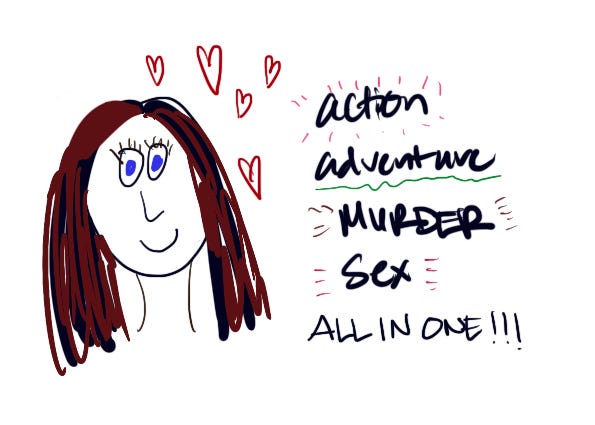
I wanted, as well, to read something specific . . . an adventure that a couple is on. I wanted Mr. and Mrs. Smith but without the assassins, I wanted ACOTAR (specifically ACOMAF) but without the fantasy. I wanted romance in the adventure; I wanted murder and sex (not at the same time); I wanted the couple to go on a high-stakes, fast-paced adventure and I didn’t want it to be slapstick.
I wasn’t finding it.
So I started writing what would become The Enigma Challenge.
A great pivot, actually
I ADORED writing The Enigma Challenge. I had SO MUCH FUN. The joy was back; it was ridiculous how much fun I had.
I sent the pitch to my agent, who loved the idea. (This was soon after our exchange about the ill-fated romance, so that was a relief.)
“But this sounds like a thriller,” she said. “I think you’re writing a thriller.”
She was right. I looked at what I had and went, “My god, I am writing a thriller, and I ADORE IT.” There was a moment, in fact, right in the middle of the story where the lights go out. The characters are in Paris in a tricky situation, in a house where the owner is deeply suspect. The lights go out and bad things happen and right there I went “OH YES.” I wanted more suspense, more bad things to happen.
We sold the book at auction.
If you’re still with me here, that’s a lot of books that never made it, even more books that died on sub, being dropped by my publisher, me not understanding myself or having perspective, and books that were commercially or craftwise unviable that my agent was like the Jonah Hill gif about.

It’s an odyssey
I’m sharing this story because it helps to know that this business is full of ups and downs. It is full of failed manuscripts and books you poured your soul into and had to leave behind you like a snake sheds skin. It just is that way. Traditional publishing isn’t a meritocracy and yet it sometimes is. It absolutely favors white, affluent women with bonus points if you’re pretty. It fast tracks writers who have an in, or a celebrity endorsement, or 3 million followers. It just does and is. There’s a lot that isn’t right, and yet no one is coming to make it right for you except you.
What we see on socials is a shiny, shooting star eruption of fame and fortune. We are led to believe that books were written on a whim by authors who have never written before, and everyone fell over themselves to buy it for millions of dollars . . . before it hit the bestseller lists, is a Jenna pick, Reese pick, and GMA pick, is a Book of the Month pick, is everywhere, and you can’t get away from it. But that is rarely the whole story; we just don’t see the back end.
I personally know several authors who look like they caught a seat on that rocket and got a major deal and film, etc., and yet suffered HARD on the way up. You just didn’t hear that bit.
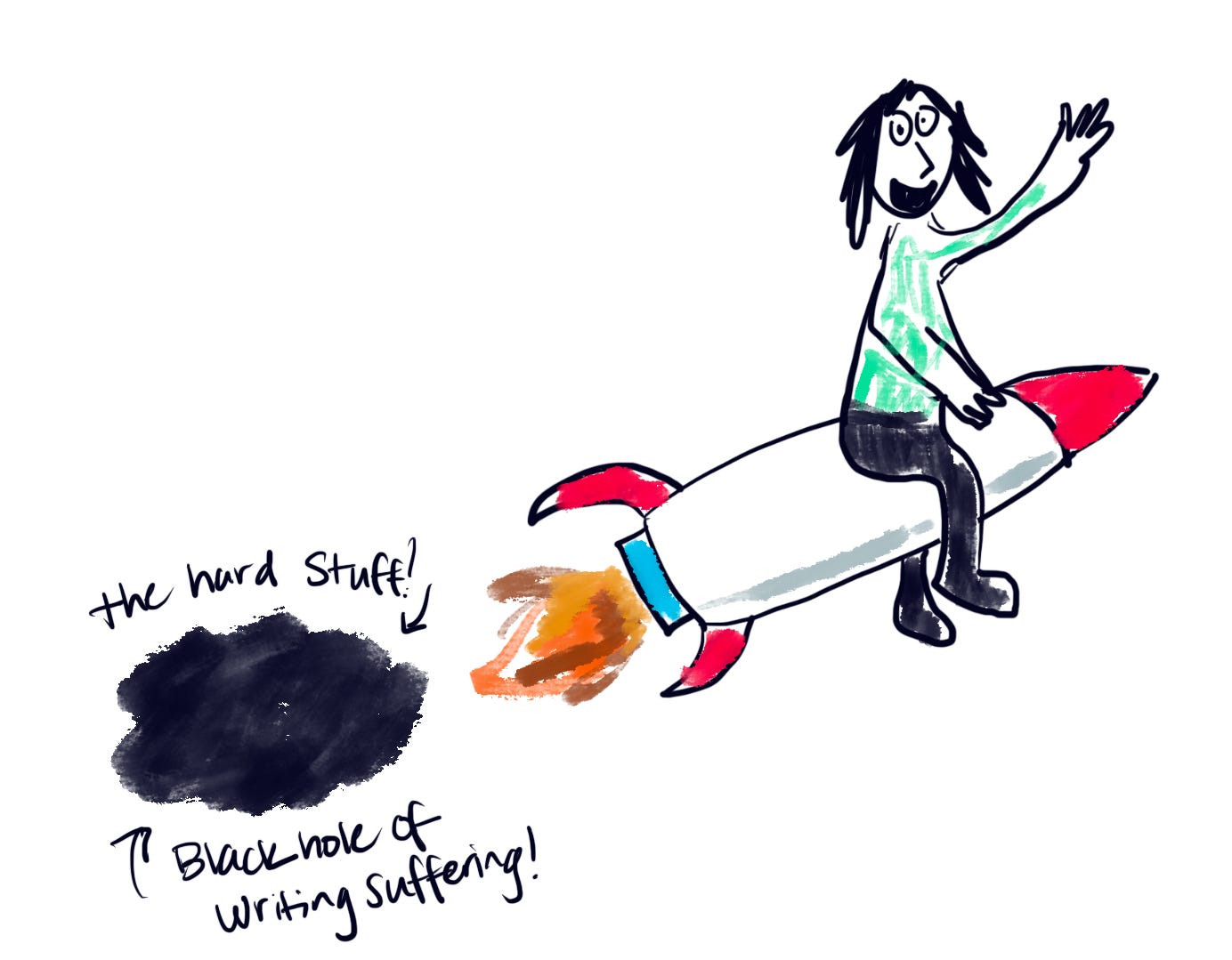
We struggle, we iterate, we strengthen our weaknesses. We get better, we learn, we read, we write.
Looking back, and this post was great for doing that, I understood little then but understand more now. I didn’t know what I wanted then but I have a much better sense of what I want now. I write none of this with any bitterness, only happiness, and that took a really long time, too. 😂 I’m not all-knowing about writing or my career, but I think the options ahead for me are clearer than they have ever been, and more importantly, I truly enjoy the process of writing. I had the time of my life writing The Enigma Challenge and The Seven Keys. And as I ready myself to work on the next book, I’m already having fun.
THAT is what I want.
Here are some more really honest looks at what it takes to get there:
Gina Banks, who just sold her debut romance in a significant, two book deal, but wrote five books and died on sub three times: Houston, We Have a Book Deal.
Meredith Schorr, who is between contracts and gives an honest breakdown of her path in My Trad Publishing Ups and Downs (Part 1) and My Trad Publishing Ups and Downs (Part 2).
Holly James, who talks about her publishing path here and describes Why I’m Hybrid Publishing After 7 Trad Books.
Elizabeth Laura Nelson talks about her path in I’m glad my book proposal didn’t sell.
k thnx bye 🧟
Can definitely relate to this post. I’m so happy for you!
Great article, Sierra! Having gone through a lot of these iterations, pivots, and two agents who retired, it certainly resonated! I know so many authors who had similar paths to yours. One said it took them 15 years to be an overnight success! You can certainly say now that you've earned it! Can't wait to read your book!